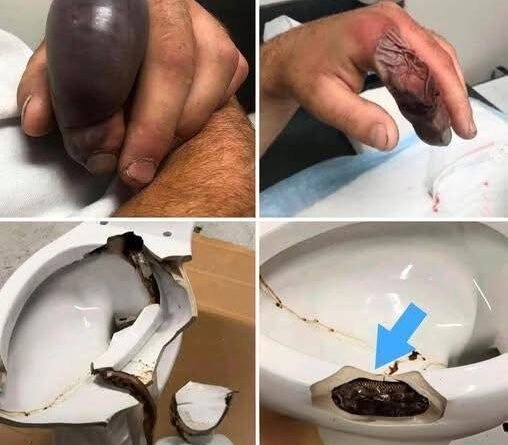
He went to the bathroom without knowing that there was a…See more
Snake Bites from Toilets: How Rare Incidents Highlight an Unusual Safety Risk
Posted on August 30, 2025 By admin
Snake bites in toilets are an unusual, often shocking phenomenon. While rare, they have occurred across multiple continents, and the consequences can range from minor injuries to serious medical emergencies. The effects extend beyond the physical to include significant psychological trauma. This section explores the medical challenges, recovery processes, infection risks, and long-term emotional consequences in great detail.
5.1 Immediate Medical Concerns
When a snake strikes in a bathroom, the unexpected nature of the attack amplifies the risk. People are often seated or in vulnerable positions, which increases the severity of injuries.
Venomous Bites
Venomous snakes such as cobras, vipers, or kraits can deliver neurotoxic or hemotoxic venom, potentially causing life-threatening effects.
Neurotoxic venom interferes with the nervous system, potentially paralyzing respiratory muscles. Immediate medical attention is critical.
Hemotoxic venom attacks blood cells and tissues, causing swelling, internal bleeding, and tissue death.
Non-Venomous Bites
Snakes like pythons, rat snakes, and carpet pythons are non-venomous but have powerful constricting abilities and sharp teeth.
Even without venom, bites can cause puncture wounds, lacerations, and heavy bleeding.
Because of the sensitive location—often thighs, buttocks, or genitals—these injuries can require surgical intervention.
Complex Wound Dynamics
The bathroom environment can make bites more complicated. Moisture and bacteria from drains can infect wounds quickly.
Immediate first aid includes immobilizing the affected area, applying pressure to slow venom spread, and cleaning the wound if possible before reaching a hospital.
5.2 Notable Case Studies
Thailand: A man was bitten on the testicles by a 12-foot python hiding in a toilet. Though non-venomous, the bite caused significant tissue damage. Surgeons worked for hours to repair the injury, and the victim required weeks of follow-up care to prevent infection and restore function.
South Africa: A Dutch tourist encountered a Cape cobra in an outdoor toilet. The venom caused severe tissue necrosis, requiring reconstructive surgery. Doctors monitored the patient for cardiovascular complications and provided antivenom therapy.
Texas, USA: A woman was bitten by a rat snake in her home toilet. Though non-venomous, the puncture wound became infected, requiring antibiotics and wound care. She also experienced psychological distress due to the shock of the incident.
Australia: A carpet python bit a woman on the thigh while she used an outdoor toilet. She required medical treatment for deep puncture wounds and suffered temporary mobility issues due to swelling.
These cases illustrate that the severity of injury depends not only on the snake species but also on the body area affected, the environment, and promptness of medical care.
5.3 Infection Risks and Hygiene Challenges
When a snake strikes in a bathroom, the unexpected nature of the attack amplifies the risk. People are often seated or in vulnerable positions, which increases the severity of injuries.
Venomous Bites
Venomous snakes such as cobras, vipers, or kraits can deliver neurotoxic or hemotoxic venom, potentially causing life-threatening effects.
Neurotoxic venom interferes with the nervous system, potentially paralyzing respiratory muscles. Immediate medical attention is critical.
Hemotoxic venom attacks blood cells and tissues, causing swelling, internal bleeding, and tissue death.
Non-Venomous Bites
Snakes like pythons, rat snakes, and carpet pythons are non-venomous but have powerful constricting abilities and sharp teeth.
Even without venom, bites can cause puncture wounds, lacerations, and heavy bleeding.
Because of the sensitive location—often thighs, buttocks, or genitals—these injuries can require surgical intervention.
Complex Wound Dynamics
The bathroom environment can make bites more complicated. Moisture and bacteria from drains can infect wounds quickly.
Immediate first aid includes immobilizing the affected area, applying pressure to slow venom spread, and cleaning the wound if possible before reaching a hospital.
5.2 Notable Case Studies
Thailand: A man was bitten on the testicles by a 12-foot python hiding in a toilet. Though non-venomous, the bite caused significant tissue damage. Surgeons worked for hours to repair the injury, and the victim required weeks of follow-up care to prevent infection and restore function.
South Africa: A Dutch tourist encountered a Cape cobra in an outdoor toilet. The venom caused severe tissue necrosis, requiring reconstructive surgery. Doctors monitored the patient for cardiovascular complications and provided antivenom therapy.
Texas, USA: A woman was bitten by a rat snake in her home toilet. Though non-venomous, the puncture wound became infected, requiring antibiotics and wound care. She also experienced psychological distress due to the shock of the incident.
Australia: A carpet python bit a woman on the thigh while she used an outdoor toilet. She required medical treatment for deep puncture wounds and suffered temporary mobility issues due to swelling.
These cases illustrate that the severity of injury depends not only on the snake species but also on the body area affected, the environment, and promptness of medical care.
5.3 Infection Risks and Hygiene Challenges