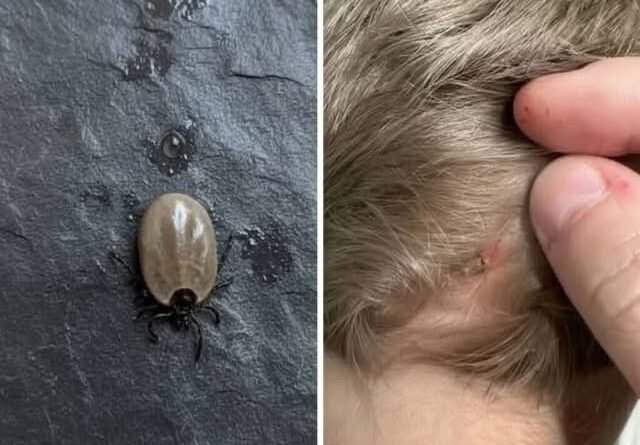
Does anyone know what kind of bug this is? Just spotted it on my child’s scalp…see more
Understanding Ticks and Tick Bites: What Everyone Should Know About These Tiny but Serious Parasites
Posted on March 14, 2026 By admin
At first glance, many people might mistake a tick for a small insect or a harmless bump on the skin. However, ticks are tiny parasites that can attach themselves to animals and humans, feeding on blood for extended periods of time. The image above illustrates two common situations involving ticks: one shows a tick after feeding, and the other shows a tick attached to a person’s scalp.
Why Ticks Attach to Humans
Ticks rely on blood as their primary source of nutrition. Once they attach to a host, they insert their mouthparts into the skin and begin feeding.
During feeding, ticks release substances that help them remain attached. These substances can reduce pain and irritation, which is why many people do not notice a tick bite immediately.
Ticks often choose warm, hidden areas of the body where they are less likely to be disturbed. Common attachment sites include:
- The scalp and hairline
- Behind the ears
- Under the arms
- Around the waist
- Behind the knees
- Between the legs
The scalp is a particularly common location because hair can hide the tick, making it harder to detect.
Why Tick Bites Matter
While many tick bites cause only minor irritation, some ticks can carry bacteria, viruses, or parasites that lead to illness. Not all ticks transmit disease, but the possibility makes prevention and awareness important.
One of the most widely known illnesses associated with tick bites is Lyme Disease. This infection is caused by bacteria that certain tick species can transmit during feeding.
Other illnesses associated with tick bites may include:
- Rocky Mountain Spotted Fever
- Babesiosis
- Anaplasmosis
These conditions vary in severity and symptoms, but early detection and treatment often improve outcomes.
It is important to note that transmission of disease typically requires the tick to remain attached for a significant amount of time, which is why early detection is beneficial.
Recognizing a Tick Bite
A tick bite may not always be immediately noticeable. In many cases, the tick remains attached and feeds quietly without causing significant discomfort.
However, some people may notice:
- A small dark bump on the skin
- Mild redness around the bite
- Slight itching or irritation
- A tick visible on the skin
If a tick remains attached long enough to become engorged with blood, it may appear larger and more rounded, similar to the tick shown in the left side of the image.
Regular skin checks after spending time outdoors can help detect ticks before they have been attached for long periods.
How to Safely Remove a Tick
If a tick is found attached to the skin, removing it promptly and carefully is important.
Health experts generally recommend the following steps:
Use fine-tipped tweezers.
Grasp the tick as close to the skin’s surface as possible.
Pull upward slowly and steadily.
Avoid twisting or crushing the tick.
Clean the bite area with soap and water or antiseptic.
After removal, the tick can be sealed in a small container or bag in case identification becomes necessary later.